
Automated License Plate Readers: A Betrayal of America's Founding Traditions

Introduction
In 1761, a Boston lawyer named James Otis stood before a colonial court and delivered a blistering attack against "writs of assistance"—general warrants that allowed British officials to search any home, any ship, any person, without specific cause. John Adams, who witnessed the speech, later wrote that "American Independence was then and there born." The Founders understood something that we risk forgetting: when a government can monitor its citizens without suspicion, liberty cannot survive. Today, automated license plate readers made by companies like Flock are deployed across American cities, silently logging the movements of millions of drivers who have done nothing wrong. This is not a new threat wearing new clothes—it is the very style of unlimited government surveillance that sparked a revolution. To understand why ALPRs are dangerous, we need to revisit why Americans ever cherished privacy in the first place.
The Colonial Roots of the Fourth Amendment
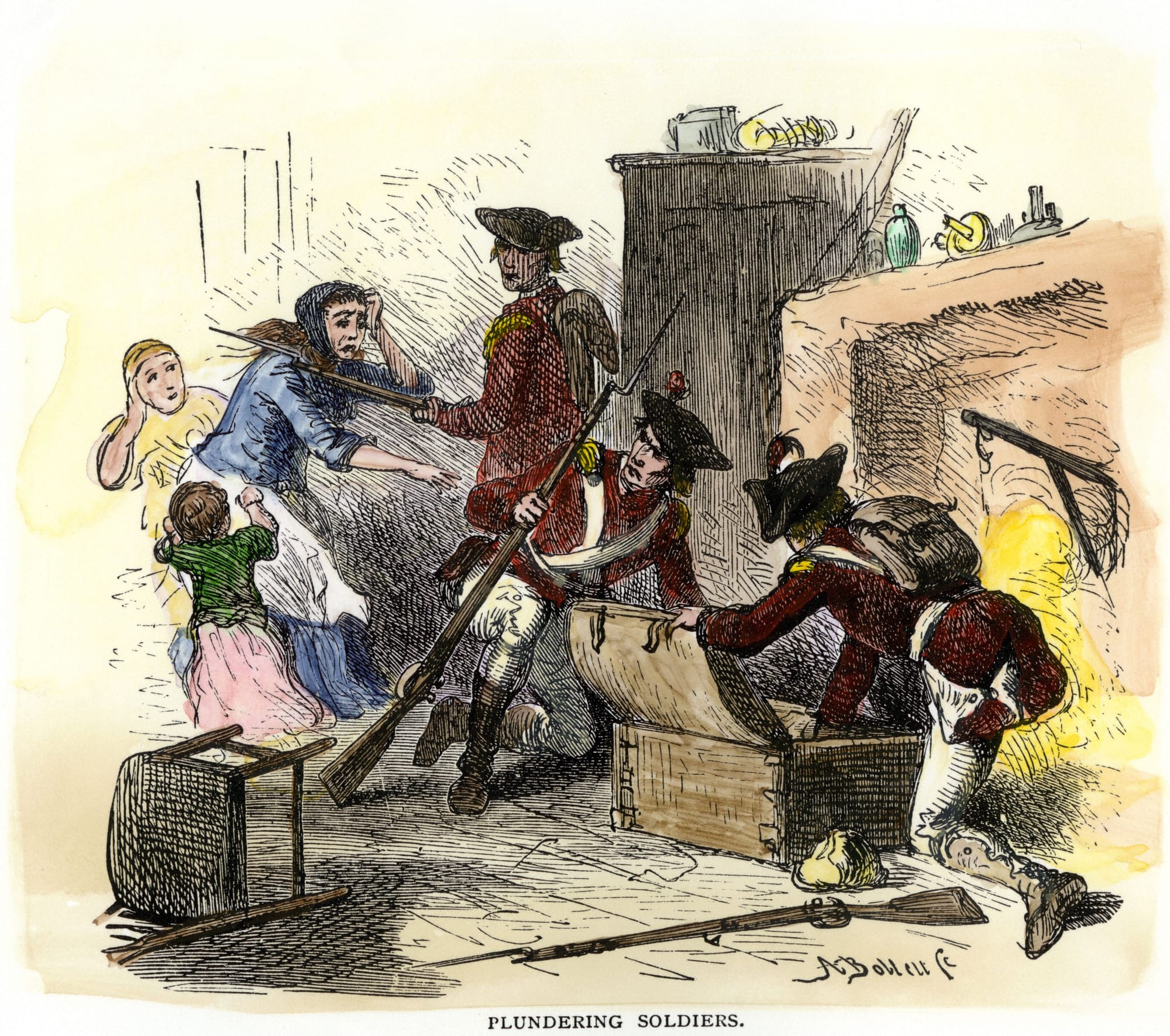
The writs of assistance that Otis railed against were not targeted tools of law enforcement—they were blank checks. A customs officer holding such a writ could enter any building, demand any records, and search any container, all without naming a suspect or specifying what he sought. There was no judicial oversight, no expiration date, and no recourse for those whose lives were upended by arbitrary intrusion. Colonists experienced this power not as protection but as harassment, a constant reminder that they lived at the pleasure of a distant Crown.
The memory of ransacked homes and seized papers burned deeply enough that when the Founders drafted the Bill of Rights, they made their response explicit. The Fourth Amendment requires that warrants describe "the place to be searched, and the persons or things to be seized." This was not a technicality—it was a repudiation of general surveillance. The government would need specific cause to investigate specific people. Anything less was unreasonable, and unreasonable searches were now unconstitutional.
The Principle Behind the Protection
The Fourth Amendment is often misunderstood as a shield for criminals, a loophole that lets the guilty escape justice. But this reading gets the principle exactly backwards. The amendment exists not because the Founders wanted to protect wrongdoing, but because they understood that unchecked government power inevitably turns against the innocent.
Privacy is the breathing room that free thought requires. As legal scholar Neil Richards argues in the Harvard Law Review, surveillance is harmful because it can chill the exercise of civil liberties—when people know they are being watched, they behave differently. They conform. They hesitate before attending a controversial meeting, visiting an unconventional church, or simply driving to a part of town that might raise eyebrows. The Founders grasped that liberty cannot flourish under a watchful eye, even a supposedly benevolent one.
More fundamentally, the Fourth Amendment enshrines a radical idea about the relationship between citizen and state: the government must justify its intrusions. It must show cause before it searches, not after. The burden of proof rests on those who wield power, never on those who simply wish to live their lives. Innocence is the default, and it is not the citizen's job to demonstrate it.
Mass Surveillance Inverts the Founding Bargain
Automated license plate readers operate on a fundamentally different logic than the one the Founders enshrined. A police officer who pulls you over has observed something, however minor, that prompted the stop. A detective seeking a warrant must present evidence to a judge. But ALPRs skip this process entirely. They photograph every plate, log every location, and store the data for weeks, months, or even years. No one is suspected of anything. Everyone is collected anyway.
This is the general warrant reborn in digital form. The writ of assistance allowed officers to search anywhere without justification; the ALPR allows agencies to track everyone without suspicion. The fact that the collection happens passively, through cameras instead of hands, does not change the principle at stake.
The Founders would have recognized this bargain as broken. When Flock cameras record your route to work, your visit to a medical clinic, and your stop at a political rally, the government assembles what legal scholars call a "mosaic" of your private life. As Justice Sotomayor wrote in her concurrence in United States v. Jones, this kind of aggregated surveillance can reveal "familial, political, professional, religious, and sexual associations"—without the government ever having to explain why you deserved scrutiny. The search comes first. The suspicion, if it ever comes at all, follows later.

Innocence Should Not Require Proof
Defenders of mass surveillance often fall back on a familiar refrain: if you have nothing to hide, you have nothing to fear. This argument sounds reasonable until you examine what it actually demands. As Professor Daniel Solove explains, it shifts the burden of proof from the government to the citizen. It assumes that privacy is only valuable to those with guilty secrets. And it asks us to trust that whoever holds power today, and whoever holds it tomorrow, will never misuse the detailed records of our movements.
The Founders were not so naive. They had watched colonial governors abuse their authority, and they knew that even well-intentioned officials can overstep when given unlimited tools. The presumption of innocence is not a reward for good behavior. It is a restraint on government, a recognition that the state must earn the right to intrude on a person's life.
When ALPRs log your plate alongside thousands of others, you are no longer presumed innocent. You are categorized, stored, and made searchable. Your movements can be queried at any time by any officer with access to the database. You have not been charged with anything, yet your life is on file. This is not safety. It is the quiet erosion of a principle that once meant something.
Conclusion
The men who drafted the Fourth Amendment had seen what happens when governments are free to search without suspicion. They had lived under a system where mere proximity to power meant vulnerability to intrusion. Their response was not to hope that officials would exercise restraint, but to demand that restraint be written into law.
Automated license plate readers represent a betrayal of this inheritance. They recreate the conditions the Founders explicitly rejected: mass surveillance without cause, data collection without suspicion, and a presumption that citizens must prove their innocence rather than enjoy it. The technology is new, but the danger is old.
If we value the liberties that earlier generations fought to secure, we cannot accept the quiet normalization of tools like Flock. That means demanding warrants before data is collected, strict limits on how long records are retained, and transparency about which agencies are watching and why. The right to move freely without being logged and cataloged is not a relic of a simpler time. It is the foundation of a free society, and it is worth defending.